Fabulously funky sounds from the Czechoslovakia. These tracks are mostly
cover versions of songs by American artists but there's enough energy
and personality here to make this album a very worthwhile listen with
some great party starters. And both sides end with a mind-melting
instrumental freak-out!
It isn’t often that a young musical group
discover themselves, and at the same time, discover their music. Such
was the case with the Shades Of Black Lightning. When the Shades first
came to my attention, the group was in the midst of developing. They had
an exciting style in Rhythm and Blues.
Coming into the studio gave them further
opportunities for experimentation. Here, the creativity and imagination
of the individual members flowered, matched by enthusiasm and the joy
found only in people who love what they are doing.
They have come to this happy point in their
development. They want to share it with you. I think you’ll agree that
the Shades are different. They bring with them sound of today and
previews of tomorrow. (Freddie Piro – Album Liner Notes)
In between studio efforts, the band released WAR Live, a double LP
documenting the dazzling dynamic synergy the band's concerts were
renowned for. Recorded during a four-night engagement at Chicago's High
Chapparral club, the set includes classic WAR favorites such as
"Slippin' Into Darkness," "All Day Music" and "Get Down" in their
original long form, as well as the previously unrecorded "Ballero," a
fiery Latin jam that reached #33 on the pop and #17 on R&B singles
charts. WAR Live continued the band's commercial success, eventually
selling a million and a half copies.
Some of the best material from Andre Williams' heady
60s funk days – including some tracks that were initially released as
singles on the tiny Duo label in Chicago, plus a bunch more that have
never been reissued at all! In the setting for the sides, Andre's
working at his hardest and heaviest – really keeping things raw and hard
throughout, even on the numbers that feature vocals. There's a number
of really great instrumentals on the album – tunes that have the rough,
ready, and nicely messed up approach of some of Andre's best Chess work
of the time – and which are a seminal bridge between the soul
instrumental style of the 60s, and the heavier funk of the 70s!
Joe Cocker is an album released by Joe Cocker in 1972. It was issued in
the U.S. on A&M Records. It contains the hit single "High Time We
Went", that was released in the summer of 1971.
Although A&M has so far never made the album available on CD in the
U.S., it licensed the recording to UK-imprint Cube Records, which issued
the album on CD (with a different cover and titled Something to Say) in
Europe; that CD is currently out-of-print.
The last of Cocker's classic early period records, it's an almost surprisingly
strong affair. The amazing thing is that this time
Joe wrote most of the material himself - in collaboration with Stainton
and others, but still, this is a really independent record, and thus an
absolute anomaly in the Cocker canon. Even more amazing, these songs are
mostly good. This is also a good album for those who like their Cocker more
rockin': lots of fast, upbeat, punchy grooves on here, and a solid enough
amount of packed energy.
Greetings from LA is about the night. About when 1960s free love became
1970s pleasure hunt.
All this is done
to a deep, exotic, popping funk, provided by the best in the business:
Chuck Rainey and many other funky associates. These were THE guys to get
if making jazz or funk or both in the 70s.
These songs
are long, girating canvases, played perefectly by these amazing
musicians. This is funk, not disco, but it is amazing how hard the beat
is driven, yet how musically it is played. The opener is blues funk.
"Get On Top" works as proto-dance music. "Sweet Surrender" is exotic,
middle eastern, a slow naughty satin burn--the stuff of your knuckle
rapping top-bottoned school teacher's most pleasent dreams.No doubt that the music is sure as hell great!
Eric Burdon's second and final album with War, Black-Man's Burdon
was a double set that could have benefited from quite a bit of
judicious editing. Composed mostly of sprawling psychedelic funk jams,
it does find War
mapping out much of the jazz/Latin/soul grooves that, cut down to much
more economical song structures, would shortly bring them success on
their own. Highlights include the soulful vamps "Pretty Colors" and
"They Can't Take Away Our Music" and the 13-minute "Paint It Black" medley
that reflects the height of their eccentricity.
Fantastic album!
Rare 70s funky soul from The Equatics – just the kind of record that
keeps us digging and still excited after all these years – resurrected
by the like minded diggers at Now Again! You know the kind of album
we're talking about, the ones you come across with enigmatic cover art,
no names on the back you recognize or even anything indicating where or
when it's from. Then you take a spin and it's the real thing from the
get go! The production is nice and raw but not ragged, and a funky vibe
that groups today emulate but just can't recapture. This set's mid 70s
R&B, mostly instrumental but with a few vocal numbers, all nicely
done up in a very groovy, funky fashion. There's a couple of nice
covers, like their Isaac Hayes-ish take on "Walk On By" and a nice
rendition of "Ain't No Sunshine", but the rest of the set's mostly
originals, like "Merry-Go-Round" and some nice raggedy instrumentals
like "What They Doin?", "Santana" done up in parts 1 and 2 (maybe on a
45 somewhere. . .), "Cisco Fare" and the jazzy "The Touch Of You".
Amazing!
World-class group centered around the personality of singer Dani Klein, a fantastic
woman who had previously developed a career as a backing vocalist for many Belgian
groups.
The story of Vaya Con Dios (a Spanish phrase which means "go with
god") started in 1986. The group was formed by Dani Klein, Dirk Schoufs and Willy Lambregt . Their first release, the single "Just
a friend of mine" characterizes the group with its love for Spanish-influenced
music and acoustic instruments. It becomes an overnight hit (300.000 sold copies
in France) and their career is on the way.
Willy decides to spend all his time with the Scabs (Vaya Con Dios wasn't
"rock'n'roll" enough) and the first full album is recorded with session
musicians. The singles "Puerto Rico" and "Don't cry for Louie"
open even more doors for the group.
The second album continues the success story (with hits like the melancholic
"What's a woman" and the joyous European hit "Nah neh nah").
The influence of Spanish flamenco shifts to "old American jukebox hits
although with unmistakable influences from gypsy music and French chanson" .
Wartts holds hard to a then-outmoded JB's/Curtom sound, with funky
drums, soft, wailing organ, golden harmonies and Oliver Sain guitarist
Earl Wright laying down a minor-key chicken-scratch soul groove. Wartts
burrows into the far corners of the Bible (The 37th Psalm,
25th verse; Luke, Chapter 16; John 14; the third chapter in the book of
Acts), his sweet harmonies making these dusty, forbidding words sound
like the mesmerizing entreaties of Curtis Mayfield. A silvery, euphoric
sound, that is also effortlessly funky, it comes close to convincing you that the way of the Lord is a joyous one, not merely the mean choice between being a sinner or a winner.
Digitally remastered and expanded reissue of the 1970 debut from the
20-member ensemble. Producers Leroy Hutson and Curtis Mayfield (both of
the Impressions) worked with the group, whose ages ranged from 12 to 21.
The Voices Of East Harlem were a community choir that grew from an
inner city action project in 1969. Their music mixed devotional Gospel
fervor with commercial R&B and Soul, and included lead vocalists
Gerri Griffin and Monica Burress. Coming to the attention of Elektra
boss Jac Holzman via their producer Jerry Brandt, they were signed in
1970 for their debut Right On Be Free, which showcased a diverse song
selection from Buffalo Springfield’s "For What It's Worth, to Richie
Haven's "Run Shaker Life", all performed in their distinctive high-energy style. plus two live tracks recorded at the “Soul To Soul” concert in Ghana in 1971.
By the 1970s gospel music was at a crossroads. Rhythm and blues had
moved into soul, and the old-timey feel of much of gospel was alienating
younger audiences. It fought back by adapting the sounds of
contemporary funk and soul to their songs of devotion, and in recent
years these records have become some of the hottest items amongst
collectors. However until now the Stax Organisation and its Gospel Truth
label had been largely ignored.
Started by label boss Al Bell and run
by veteran black music radio promotions man Dave Clark, it aimed to
capitalise on the success Bell had had with the Staples Singers, the
gospel group becoming a pop sensation on the main Stax label. The idea
was that the Gospel Truth label would take existing and new gospel acts
and give them the Stax makeover. The very best soul musicians in the
world would take time out from cutting hits to create the music for a
series of gospel soul and funk masterpieces.
This compilation
tells the story of Stax's move into the gospel field by choosing the
best of the output. From the Staple Singers' glorious template via the
inspired and unique voice of Rance Allen, the mainstay of the Gospel
Truth label itself. We have cuts from the sought-after and super-rare Sons Of Truth LP, and Joshie Joe Armstead's You Got The Vibes, a UK northern soul monster almost from the day it was released.
The
20 tracks reflect the sound of popular black American music of the day -
from the out and out funk of Clarence Smith, through the group soul
harmonies of 21st Century to the proto-disco sound of the Howard Lemon
Singers. If the connection with God sometimes seems tenuous, it was all
part of the plan to bring you to Him by stealth.
A master piece by Akira Ishikawa and his band. They play successfully covers of themostfamousstandardofrhythm &blues and Jazz from Stax orAtlantic records (Otis Redding, Joe Zawinul, Eddie Floyd, Aretha Franklin, The Bar-Kays...)
"An excellent bit of southern funk -- very much in the early mode of
Little Beaver, but with a sound that's even harder! James Knight is The
Black Knight -- leading a tight little combo with a raw funky 45 sound,
heavy on the horns for backing, but with James' guitar right up front in
the mix, jamming hard in a way that would have made Hendrix proud! The
tracks are a mix of heavy funk numbers and more tripped-out jams -- and
Knight's vocals remind us a bit of Charles Wright in the old days,
blaring out of the speakers with a bit of distortion and lots of soul,
really driving home the quality of the songs. Titles include "Fantasy
World", "Save Me", "Flyin High", "Funky Cat", "Uncle Joe", "Cotton
Candy", and "Just My Love For You".DG
Demon Fuzz is the brainchild of Paddy Corea, born during his musical
sojourn in Africa (Morocco 1968). The idea was to blend all the
musical influences & poly-rhythmic styles he had experienced, from
sax to the 'steel pan', vibes, guitar,flute, jazz, reggae,
classical, Indian raga, blues, suffi Arabic sounds, ska, calypso,
Ethiopian church music, African highlife, kwela music,Joe
Harriot-Shake Keane Indo-Jazz Fusions. All these influences
synthesized into Demon Fuzz.We wrote some, we borrowed some, but
we constructed a new sound, different from all the other black bands in
England at the time, so much so Demon Fuzz became the prototype of a
new musical genre in England, baptized as Afro-Rock by the legendary
Eddie Grant and Paddy Corea. We used different time signatures 6/8,
3/4, 4/4, 5/4, and several types of rhythms,different movements
in the same piece (like classical works), used steel-band type bass
and blues harmonics in some passages, African drumming even
early rap (Biafra , Our World Today).We inspired a new breed of
bands after 1969, Spear, Cymande, Protoplazm, Batti-Mamselle,
Assagai, Noir, The New-Tonics, even Osibisa, and many more.
New Orleans Rock&Roll, R&B, Soul, & Funk Goodies 1955 to 2007
This Vampi Soul collection is arguably the most representative audio
portrait of the New Orleans songwriting and performing kingpin, Edwin Bocage.
Covering 60 years of music making, its whopping 28 tracks highlight his
songs, singles, and productions for other artists. Like all of the best
New Orleans music, this baby is sweaty, raw, greasy, and super funky.
Some of the classics here include Bo's stellar bit of proto-soul-funk in "I Found a Little Girl" (while it may borrow from Ray Charles' gospel-soul inspiration, it gives back in its prefiguring of the bridge style James Brown
used to great success later on), "We Like Mambo" (the Afro-Caribbean
style welded hard to NOLA second line), and the great break-driven duet
"Lover & Friend" with Inez Cheatham.
There are an equal number of highlights in his productions and
arrangements including -- but not limited to -- "Horse with a Freeze,
Pt. 1" by Roy Ward, the Explosions' "Garden of Our Trees," with its burning bassline and tight horn charts, and Curley Moore & Cool Ones' "Funky Yeah" (which is just damn nasty in the way it uses Bo Diddley's "Who Do You Love" rhythm). Then there's the elastic wah-wah guitar and keys in "The Rubber Band" by Bo
with the Soul Finders and the straight-up employment of a Motown-style
string chart on his 2007 single "Chained." Anyway you want to listen to
this slab, chronologically, on shuffle, or one track played over and
over until you gotta move to the next, is just fine because In the Pocket with Eddie Bo. is the bomb.
Their 1973 self-titled album sank without a trace as the band toiled
in the shadows of Chicago's South Side scene. They fit right in with the
other challenging acts in the scene, including the Art Ensemble of
Chicago, Sun Ra, Phil Cohran, the Pharaohs and Earth, Wind & Fire
(in their pre-disco days), but in the end they just couldn't get
themselves heard over their neighbors.
Their album is a swirling near-masterpiece that pulls together
smoking funk rhythms, strands of free jazz and deep soul, conscious
lyrics, amazingly complex and harmonically sophisticated horn
arrangements, and assorted other ingredients to make music that fell
outside the lines of any particular genre. "If I Had My Way" is a
stone-cold classic of socially aware funk that never got its chance to
reach a wide audience, "I'm What You Need" is a surprisingly tender,
harmony-drenched ballad that proves they could write a pop tune when
they wanted to, and "Writin' On the Wall" is a tortured, lurching plea
for people to wake the hell up and look at the problems of the world
around them with an eye to solving them.
In 1999, Boney released his first CD under the name of his band « The Bone’s Project ».10 tracks among which seven 7 original compositions perfectly
illustrate Boney’s musical world; a repertoire that goes back to the
origins of blues but also offers a real variety of rhythms, from
traditional Chicago blues to wild Rock and Roll as well as funky groove
in the same vein as Cameo. The repertoire also includes some Reggae with
an outstanding remake of “Express Yourself”.
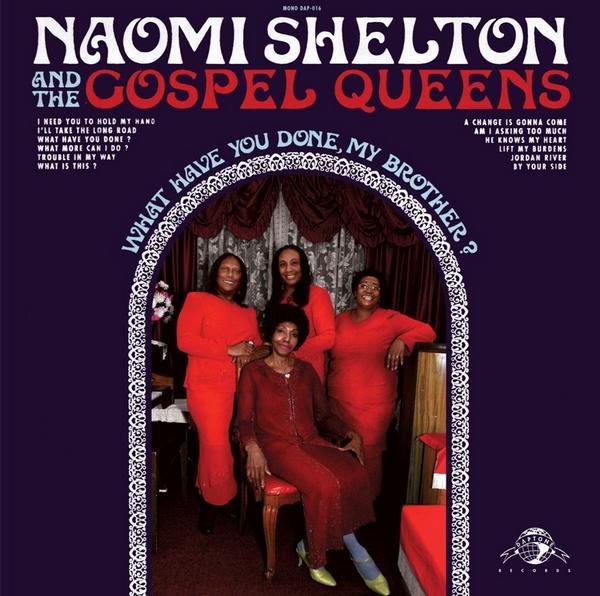
Daptone's latest release by Naomi Shelton and the Gospel Queens, out
Tuesday, May 26, is a little bit Sam Cooke, a lot '60s soul, and all in
servitude to the Lord. “What Have You Done, My Brother” is such a fine
record. Lyrically, it's all gospel but numerous tracks sound straight
out of the '60s soul bin. While that may sound foolish knowing it's a
Daptone record, credit Cliff Driver and the various Dap-Kings members
that play on this record for really giving it a nice soundbed. Also,
credit the Gospel Queens - Edna Johnson, Bobbie Jean Gant, and Cynthia
Langston - as they really enliven the call-and-response with Shelton.
Driver,
the musical director of the group, is a pianist who has backed numerous
soul legends such as the R and B of R&B... Ruth Brown, Solomon
Burke, and even had a stint in Latin music working with the Johnny
Ortega Band. If you recognize the lead vocalist, it's because she
appeared on the Desco 45 “41st St. Breakdown” by Naomi Davis and the
Knights of Forty First Street and on The Sugarman Three's “Promised
Land.”
The album was culled mainly from sessions in the summer of
2007 with some even predating that. The title track is the most
secular of the material and has a distinct Daptone sound, which may be
the reason why it was chosen as the lead single. Elsewhere “I'll Take
The Long Road” and “I Need You To Hold My Hand” really dig deep into the
gospel roots and are the two showcases on the album. The former leads
with the same guitar lick as Cooke's “That's Where It's At” and is a
slow gospel burner. Shelton sings with passion about walking
side-by-side on her journey to redemption.
While she's not the
firecracker that Sharon Jones is, Naomi exudes a confidence that more
than makes up for the lack of sass. After all, who says you have to
have attitude to make a good album? With the opening chords on “What Is
This,” which resemble the opening of Cooke classic “A Change Is Gonna
Come” (which is also the album closer), you get a sense that you'll be
on a long but righteous road of glory. If you have a set of headphones
for your walk, be sure to bring this album with you.